Iran Ceasefire and the Stock Market: Winners, Losers, and What's Next
The Iran ceasefire sparked a stock market rally. Here's how it impacts energy, airlines, defense stocks, and what history says about post-war market patterns.

The Iran ceasefire announced on April 8, 2026 sent U.S. stocks surging — the S&P 500 notched a seven-day winning streak as investors scrambled to reposition. But while equities celebrated, the bond market told a more cautious story.
How the Iran Ceasefire Stock Market Rally Unfolded
When news of the ceasefire broke, the market reaction was swift and decisive. The S&P 500 extended its winning streak to seven consecutive days, driven by a broad rotation out of defensive positions and into risk assets.
Oil prices dropped sharply, falling below pre-conflict levels as the threat of supply disruptions through the Strait of Hormuz faded. According to the U.S. Energy Information Administration, crude benchmarks retreated rapidly once the ceasefire was confirmed. West Texas Intermediate (WTI) crude pulled back roughly 12-15% from its wartime highs, dragging energy stocks lower while giving a lifeline to fuel-dependent industries.
The pattern is familiar. Geopolitical risk premiums get priced into markets during conflict, and when that risk recedes, the unwinding creates outsized moves in both directions. What made this ceasefire different was the speed — markets had been pricing in a prolonged engagement, so the sudden de-escalation caught many investors off guard.
Trading volume spiked across major exchanges, with particularly heavy activity in airline, cruise, and defense ETFs as portfolio managers rushed to adjust their exposure.
Stock Market Winners After the Iran Ceasefire
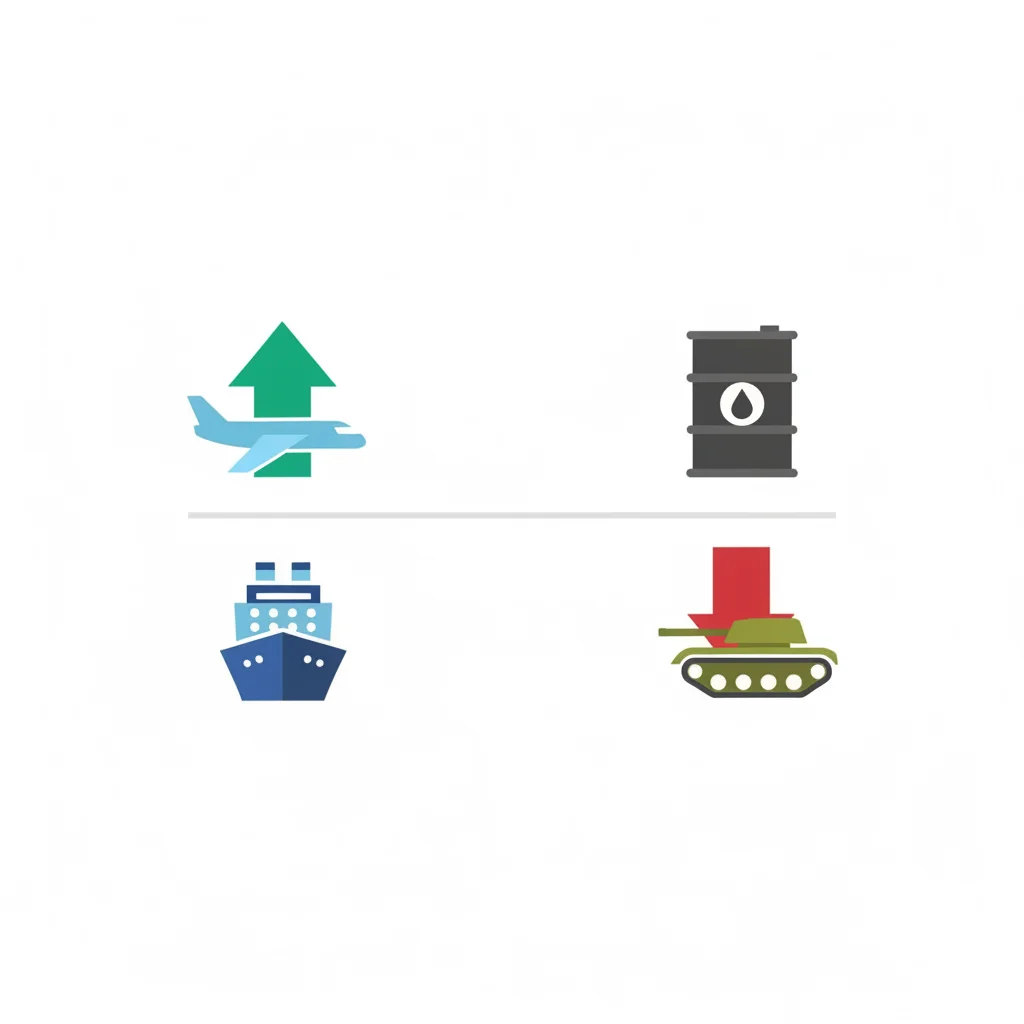
Not all sectors benefit equally when a ceasefire is announced. The iran war impact on the stock market created clear winners — companies that had been punished by high oil prices and geopolitical uncertainty.
Airlines: Fuel Costs Drop, Margins Expand
Airlines are among the most fuel-sensitive businesses in the market. Southwest Airlines (LUV), down 3.6% year-to-date before the ceasefire, stands to benefit directly from declining jet fuel costs. Analyst consensus targets $47.50 per share, representing roughly 19% upside from pre-ceasefire levels. InvestingPro’s fair value model suggests at least 13.1% upside potential.
The logic is straightforward: lower oil prices translate directly to lower operating costs, and airlines don’t typically pass those savings back to consumers immediately — they pocket the margin improvement first.
Cruise Lines: Summer Travel Rebound
Norwegian Cruise Line (NCLH) had been battered during the conflict, dropping 11.9% year-to-date amid concerns about Middle East shipping routes and consumer travel sentiment. With a market cap of $9 billion and an average analyst price target of $22.68 (roughly 15% upside), the cruise sector could see a meaningful recovery heading into the summer travel season.
The company’s 25.9% EBITDA margin and 23.3% return on equity suggest the underlying business remains strong — it was geopolitical fear, not fundamentals, holding shares back.
Infrastructure and Reconstruction
Caterpillar (CAT) represents a different angle on the ceasefire trade. Already up 25.1% year-to-date with a market cap of $333.4 billion, the infrastructure equipment giant benefits from anticipated reconstruction demand and reduced global friction in supply chains. Its 20.7% EBITDA margin and 43.5% return on equity make it a quality play, though analysts note the stock may already reflect much of this optimism.
The Losers: Energy and Defense Stocks Under Pressure
Every ceasefire has a flip side. The sectors that thrived during the conflict now face a reckoning.
Energy Stocks Give Back War Premiums
Energy companies that surged on supply disruption fears are now seeing those gains evaporate. Oil majors like ExxonMobil and Chevron, which had rallied on elevated crude prices, face margin compression as oil prices normalize.
The key question for energy investors: will energy prices go up again because of the Iran war, or is this ceasefire durable? History suggests oil prices tend to overshoot to the downside after ceasefire announcements, creating potential entry points for long-term energy bulls — but only if the peace holds.
Defense Contractors: From Tailwind to Headwind
Defense stocks had been market darlings during the conflict, with companies like Lockheed Martin, Raytheon, and Northrop Grumman seeing elevated order expectations. The ceasefire introduces uncertainty about whether the heightened defense spending trajectory will continue.
However, defense analysts note that military budgets operate on multi-year cycles. Even with a ceasefire, the conflict likely accelerated procurement timelines that won’t reverse overnight. The pullback may be more muted than investors expect.
What History Says About Post-War Stock Market Rallies

This isn’t the first time markets have celebrated the end of a Middle East conflict. Historical patterns offer useful — if imperfect — guidance for what happens next.
The Gulf War (1991)
When the Gulf War ended in February 1991, the S&P 500 rallied approximately 25% over the following 12 months. The initial surge was sharp, with most gains concentrated in the first three months. Oil prices dropped from around $40 to below $20 per barrel, powering a broad economic recovery.
The Iraq War (2003)
The fall of Baghdad in April 2003 preceded a 28% gain in the S&P 500 over the following year. However, markets remained volatile as the post-war situation proved more complex than investors initially expected. The lesson: ceasefire rallies can be powerful, but follow-through depends on whether peace actually sticks.
The Pattern
| Conflict | Post-Ceasefire S&P 500 (12 months) | Oil Price Change | Key Driver |
|---|---|---|---|
| Gulf War (1991) | +25% | -50% | Consumer confidence rebound |
| Iraq War (2003) | +28% | -20% | Global growth recovery |
| Iran War (2026) | TBD | -12 to -15% (so far) | Geopolitical risk premium unwind |
The historical average suggests 20-30% upside over 12 months following a ceasefire — but with a critical caveat. Both previous rallies occurred alongside accommodative monetary policy. Today’s environment, with the Federal Reserve still navigating inflation concerns, may limit how much of that historical pattern repeats.
The Bond Market Warning: Why We’re Not Out of the Woods Yet
While stocks celebrated, the bond market sent a different signal. Treasury yields remained elevated despite the ceasefire, suggesting fixed-income investors see risks that equity markets are overlooking.
Why the disconnect? Several factors:
- Inflation concerns persist. The conflict disrupted supply chains and pushed commodity prices higher. Those inflationary effects don’t reverse overnight just because a ceasefire is announced.
- Federal Reserve policy remains tight. The Fed is unlikely to cut rates simply because geopolitical tensions ease. If anything, a stock market rally reduces the urgency for monetary easing.
- Ceasefire durability is uncertain. Bond markets tend to be more skeptical than stock markets. Until there’s a formal peace agreement — not just a ceasefire — Treasuries may continue pricing in a risk premium.
- Fiscal spending aftermath. The war effort added to an already stretched federal budget, and those costs don’t disappear with a ceasefire.
This stock-bond divergence is worth watching closely. Historically, when bonds refuse to confirm an equity rally, it often signals that the celebration may be premature.
What to Invest in After the Iran Ceasefire: Practical Steps
The ceasefire creates opportunities, but disciplined investors should avoid chasing the initial surge. Here’s a framework for thinking about positioning:
Consider dollar-cost averaging into beaten-down sectors. Airlines, travel, and consumer discretionary stocks that were punished during the conflict may have the most room to recover. But buying in increments rather than all at once protects against the possibility that the ceasefire doesn’t hold.
Don’t dump energy entirely. The knee-jerk selloff in energy stocks may overshoot. Global energy demand trends haven’t changed, and OPEC+ production discipline could put a floor under oil prices even without a geopolitical premium.
Watch the credit markets. Investment-grade and high-yield bond spreads — tracked by the FRED database — are a better real-time indicator of economic stress than stock prices. If spreads continue narrowing, it confirms the ceasefire rally has fundamental backing.
Rebalance, don’t speculate. If your portfolio drifted toward defensive positions during the conflict — more cash, more bonds, more utilities — now may be the time to rebalance back to your target allocation. This is different from making aggressive bets on a ceasefire trade.
Frequently Asked Questions
Will the Iran War Affect the Stock Market Long-Term?
The short-term impact has been significant, but long-term effects depend on whether the ceasefire leads to a durable peace. Historical precedent from the Gulf War and Iraq War suggests markets typically recover within 6-12 months after hostilities end. The bigger long-term risk may be the inflationary aftershock from disrupted supply chains and elevated energy prices during the conflict period.
Will Energy Prices Go Up Because of the Iran War?
Energy prices have already pulled back sharply since the ceasefire announcement, but they may not return to pre-war levels immediately. OPEC+ production decisions, the pace of Iranian oil returning to global markets, and the durability of the ceasefire itself will all influence where energy prices settle. Most analysts expect oil to stabilize 5-10% above pre-conflict levels in the near term.
Which Stocks Benefit from the Iran Ceasefire?
Fuel-dependent industries like airlines (Southwest, Delta, United) and cruise lines (Norwegian, Royal Caribbean) are direct beneficiaries of lower oil prices. Infrastructure and industrial companies like Caterpillar may benefit from reconstruction demand. Consumer discretionary and travel stocks also tend to rally as geopolitical uncertainty fades and consumer confidence rebounds.
How Will a War in the Middle East Affect Retirement Accounts?
If you’re investing for retirement with a 10+ year time horizon, history strongly suggests staying the course. Every major geopolitical conflict since World War II has been followed by a market recovery. The worst thing retirement investors typically do is sell during fear and miss the subsequent rebound. If you’re within 5 years of retirement, ensure your allocation matches your risk tolerance — but don’t make panic-driven changes.
What Stocks to Buy During the Iran Conflict Recovery?
Rather than picking individual stocks, many financial advisors suggest broad-based ETFs that capture the recovery across multiple sectors. An S&P 500 index fund (SPY or VOO), a total market fund (VTI), or sector-specific ETFs for airlines (JETS) and travel (AWAY) offer diversified exposure to the ceasefire rally without the concentration risk of individual stock picks.
The bottom line: The Iran ceasefire triggered a powerful stock market rally, with clear winners in airlines, travel, and infrastructure — and losers in energy and defense. History suggests post-war rallies can deliver 20-30% gains over 12 months, but the bond market’s caution is a reminder that this ceasefire still needs to prove it can last.
This article is for informational purposes only and does not constitute investment advice. Always do your own research before making financial decisions.